Monthly Archives: October 2026

Digital Inclusion for Social Good

Digital Inclusion for Social Good

One key issue with datasets becoming integral to daily life is algorithmic exclusion and inherent bias. Algorithms exclude and perpetuate marginalised populations, cultures, and ways of being in ways that reflect the social relations prevalent online. This creates power asymmetries over control and use of data, with power concentrated in a few companies with limited public accountability. Low digital literacy and diminishing community agency increase this problem, as do gaps in managing online risk and data safety.

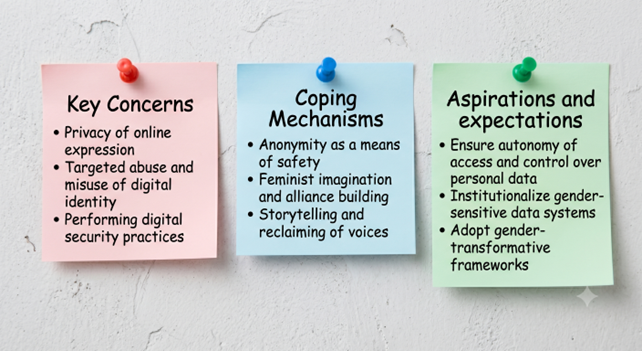
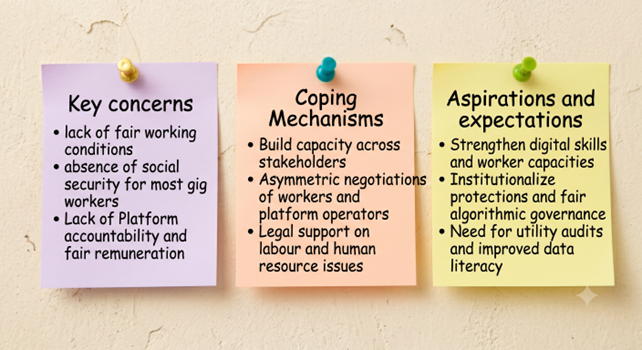
The field observations, as illustrated below, are based on a series of qualitative studies with various demographics conducted in 2025-26 in smaller towns in India, with particular focus on women using digital content through personalised apps; gig workers associated with platforms; and people from marginalised backgrounds.

Gender remains a persistent and consequential axis of digital inequality. Women Participants described lived experiences of stigma, exclusion, and discrimination, especially around gender. This highlights why feminist approaches

must address how patriarchy, asymmetries, and other structures act together to produce inequality.

The gig economy centres task-based, piecework assignments with short-term contracts and flexible timings, mediated by digital platforms. Evaluating gig livelihoods requires attention to platform indifference and the absence of worker protections.

Digital divide and intersectional exclusion: Socioeconomic barriers prevent many marginalised individuals from accessing reliable technology or internet connections, particularly in small-tier towns. All stakeholders must rethink the adoption of emerging technologies not only by capability but also through the lenses of power, accountability, and sustainability.

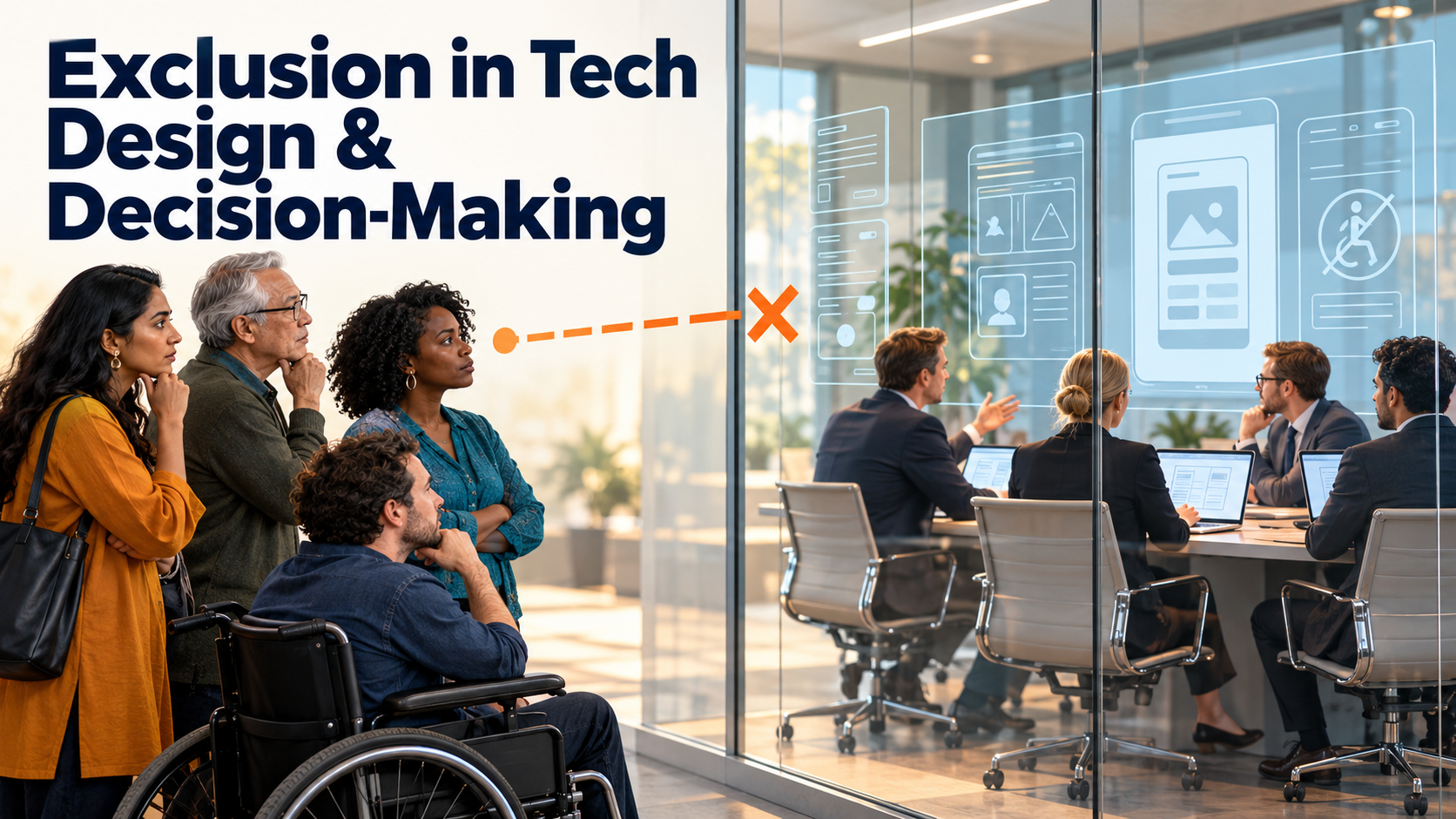
Exclusion in Tech Design & Decision-Making

Exclusion in Tech Design & Decision-Making


Beyond work-related and educational use, digital technologies are quietly reshaping social

practices. The digital divide and simultaneous surge of Artificial Intelligence and Large language models in everyday life have kept exclusion deeper, which should not be a binary of inclusion versus exclusion but larger economic structures.


Factors Keeping Marginalised Outside the Tech Design & Decision-Making


  • Lack of diverse voices at the design table— Communities absent; systems don’t serve unique needs
  • Insufficient data from marginalised populations — creates blind spots in model performance
  • Historical exclusion from tech development— corporations/governments excluded groups from deployment/oversight
  • Concentration of AI infrastructure— infrastructure concentrated in Global North; South excluded from rule-setting
  • Data extracted from Global South without consent; economic value accrues to Global North companies
  • Unclear transparency— ‘black box’ models limit accountability for bias correction

Cases and regional examples


  • Asia: Researchers and civil-society groups in South Asia and Southeast Asia have documented LLM outputs that reinforce occupational and cultural stereotypes about women and certain ethnic groups.
  • Africa: Studies from African researchers and NGOs show that many LLMs trained primarily on Western text produce inaccurate or biased characterisations of African women and underrepresent local languages and gender identities, leading to misgendering and exclusion in local languages.


Latin America: Researchers in Latin America have reported that AI systems sometimes replicate patriarchal language patterns and stereotypes, and regional advocacy has pushed for gender-inclusive corpora and participatory evaluation with local feminist organisations.

Human-in-the-loop

Human-in-the-loop


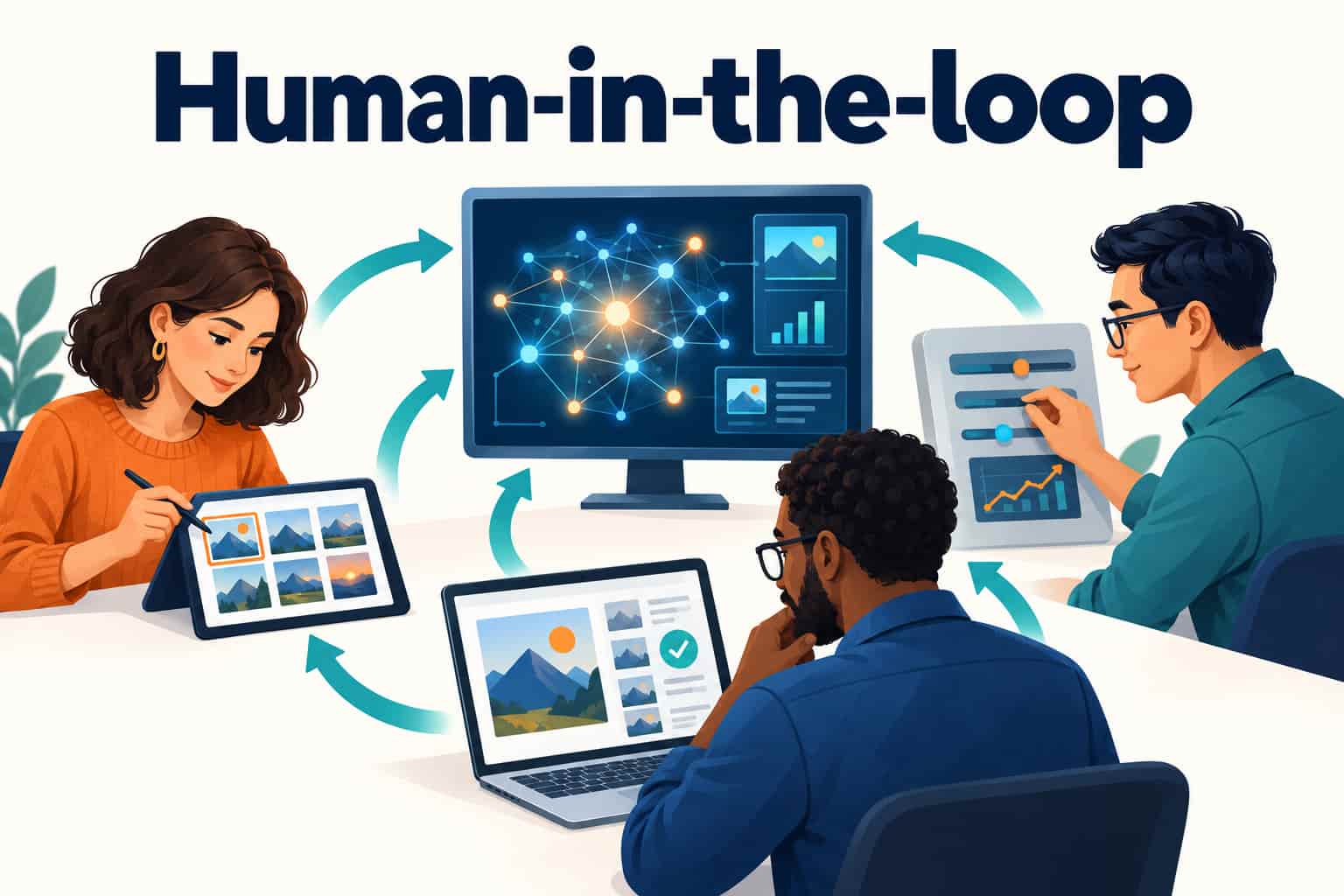
Human-in-the-loop (HITL) in general parlance means humans and AI work together at every important step of an AI system. HITL is a system of processes where various ‘humans,’ such as data annotators and evaluators, data scientists, and engineers, interact with the model differently to guide it.


Why keep humans in the loop


  • Improves accuracy and reliability because humans catch errors and weak spots in the model.
  • Helps detect and reduce bias in data and predictions, making results fairer.
  • Increases transparency and trust, as humans can explain and review decisions.
  • Supports ethical decisions, legal compliance, and clear accountability.


How does HITL work in practice


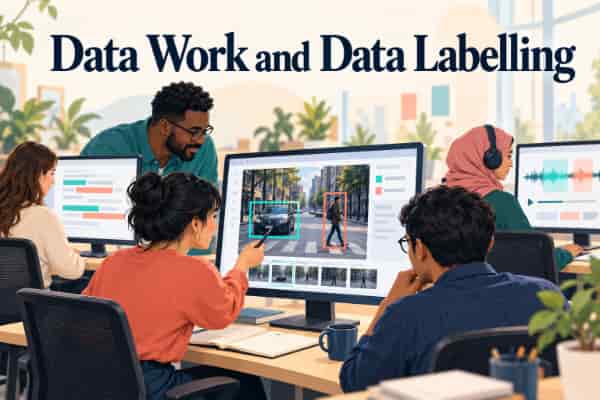
  • Collect and label data– Humans label images, text, or audio to create training datasets.
  • Train the model– The AI learns patterns from these labelled examples.
  • Test and review outputs– AI predictions are checked by humans, who accept, reject, or correct them.
  • Feed corrections back– Corrections are added as new training data, improving the model over time.

During data preparation and training, models often use historical data that may contain hidden biases. Human reviewers can spot these biases early and correct labels or rules so the model does not learn unfair patterns.

Even as AI becomes more powerful, human expertise in labelling, reviewing, and giving feedback remains essential, especially for safety, fairness, and real-world reliability. Despite increased automation, data annotation and feedback modelling still require human-in-the-loop systems, making it an indispensable element in the AI model training lifecycle.

Data Work and Data Labelling

Data Work and Data Labelling


Data workers play a critical role in sustaining global AI value chains. Data work is dispersed across transnational value chains that include data labelling, content moderation, and downstream AI deployment.

Large-scale annotation projects and moderation pipelines increasingly rely on distributed human labour to produce the training datasets and safety signals that underpin modern AI systems.

Broadly, data work includes tasks such as data collection, annotation, labelling, tagging, classification, transcription, processing, and content moderation.

  • The World Bank estimates that there are between 150 to 430 million digital and data laborers worldwide, million digital and data laborers worldwide, a vast majority of whom reside in the Global South.
  • Globally, the digital gig workforce encompasses hundreds of millions of people, constituting roughly 4.4% to 12.5% of the global labour force.
  • The global digital labour market is expanding at a Compound Annual Growth Rate (CAGR) of 17.20% and is projected to scale up to USD 23.7 billion by 2034.
  • The global market for data labelling and annotation services was valued at over USD 18 billion in 2024, reflecting the growing dependence of AI systems on large-scale human labour for training and optimisation.
  • Firms reportedly spent more than USD 1.7 billion on data labelling services in 2019, with expenditures projected to rise significantly in recent years alongside rapid AI expansion.
  • An estimated 1–2 million people globally perform annotation and related “microtask” work for AI each year, with a substantial share located in South and Southeast Asia and parts of Africa.
  • Human data labourers often toil in ‘digital sweatshops’, sifting through 1000 cases per shift and sometimes working up to 20 hours a day to meet quotas.


Precarity in the Loop

  • Content moderators and data workers are often positioned at the bottom of the digital labour value chain.
  • Platform-based and remote work may provide flexibility and dignity compared to traditional informal employment, but can also create social isolation and weaken opportunities for collective organising.
  • Economic insecurity, unemployment, and weak social protection systems push many workers toward data work as one of the few accessible livelihood options.
  • Performance evaluations are heavily tied to efficiency metrics such as processing speed, output volume, and accuracy rates, directly affecting job security.

Reference


 Navigating the Gigification of Work

 Navigating the Gigification of Work


Recent data from the Economic Survey 2026 and various reports paint a picture of a sector shifting from a flexible “side hustle” into a demanding, rigid full-time profession. The business data suggest that platform businesses are growing at an unprecedented pace in India, whereas recent studies also indicate that there is rising precarity and discontent among the labour force engaged in this sector.

The Economic Survey-2026 India notes that while gig work has expanded rapidly alongside the growth of digital platforms, smartphones and digital payments, earnings remain uneven and access to credit and social security continues to lag for a large section of workers.

A NITI Aayog brief by NITI Aayog estimates that in 2020–21 about 7.7 million (77 lakh) workers were engaged in the gig economy, expanding to an expected 23.5 million (2.35 crore) by 2029–30 ().


Who are gig workers?


  • Definition: Gig workers perform work or participate in arrangements outside the traditional employer–employee relationship.
  • Types: Platform-based workers find tasks through apps and digital platforms; non-platform gig workers include casual wage workers and own-account workers in conventional sectors who work part-time or full-time.
  • Payment and status: The ILO characterises gig workers as self-employed or independent contractors who obtain clients and projects through online platforms and are typically paid per task or project rather than receiving a regular wage.


  • India’s gig workforce grew about 55% from 7.7 million in FY21 to 12 million in FY25, according to the Economic Survey 2025–26.
  • Gig workers now represent over 2% of the total workforce, and their growth outpaces overall employment. Non-agricultural gig work is projected to constitute 6.7% of the workforce by 2029–30 and contribute ₹35 lakh crore to GDP.
  • About 40% of gig workers report earnings below ₹15,000 per month.
  • The Code on Social Security (2020) is the first piece of legislation in India on gig work. The code mentions and defines gig workers as individuals earning beyond the traditional employer-employee relationship.


RAISE Framework


As Central and State governments draw up rules and regulations under CoSS 2020, they could adopt the five-pronged RAISE approach to ensure realisation of full access to social security for all gig and platform workers:

RAISE stands for Recognise, Allow, Incorporate, Support, Ensure.


Recognise the varied nature of platform work to design equitable schemes.

Allow augmentation of social security through innovative financing mechanisms.

Incorporate, while designing schemes, the specific interests of platforms, factoring in the impact on job creation, platform businesses and workers.

Support workers to subscribe to government schemes and welfare programmes through widespread awareness campaigns.


Ensure benefits are readily accessible to workers


A series of studies have been done by  NITI Aayog (2022), National Council of Applied Economic Research (2023), IT for Change; Centre for Labour Studies, NLSIU (2023) and PAIGAM, University of Pennsylvania (2024) in bringing forward issues affecting gig workers. Fairwork India (2023) has contributed by studying platforms and providing them with annual ratings based on their treatment of workers across parameters like fair wages, contracts, and social security.

Reference

https://www.ilo.org/publications/expansion-gig-and-platform-economy-india-opportunities-employer-and

https://www.niti.gov.in/sites/default/files/2023-06/Policy_Brief_India%27s_Booming_Gig_and_Platform_Economy_27062022.pdf

https://www.epw.in/engage/article/growing-gig-economy-india-more-merrier

https://tgpwu.org/wp-content/uploads/2024/03/Report-Final-Print-1.pdf

The Code on Social Security, 2020 https://labour.gov.in/sites/default/files/ss_code_gazette.pdf

Fair Work

ICT4D Successful Case Studies from Asia & Africa

ICT4D Successful Case Studies from Asia & Africa


Information, Communication and Technology for Development (ICT4D) has been seen as a panacea for resolving the digital divide and bringing socio-economic changes in rural landscapes. Various interventions have been undertaken in the countries of the Global South, which have shown great adoptability of ICT tools.

Case Study & Country Initiator/Organization Mobile Technology USP Key Learnings Region
M-Pesa (Kenya) Safaricom (telecom), Visa, Grameen Creative Mobile phone (USSD/SMS) First mobile money service enabling cash transfers without bank; replaced physical money transport Fit into existing social practices (money transfers home, savings); dedicated system builders critical; engineering social/economic environment essential Africa
MomConnect (South Africa) South Africa National Dept of Health (NDOH) Mobile phone (USSD/SMS) World’s first nationwide mHealth program; government-led registration of pregnant women into national system High-level government buy-in fundamental; facility-based registration, facility code, helpdesk; demand generation; evidence-based messages in understandable language Africa
Kilkari (India) ARMMAN, Ministry of Health (MoHFW) Mobile phone (IVR voice calls) Largest maternal messaging program (3.2M+ users); AI-predicted timing for 12% higher pickup; audio in local language AI for timing optimization; public-private partnership scale; audio benefits marginalized with least resources; 22-28% behavior change achievable Asia


mMitra (India) ARMMA, Mobile Alliance for Maternal Action (MAMA) Mobile phone (voice calls/missed call system) Free voice calls with 9 tries per message, missed call system; urban slum focus; anemia & low birth weight reduction Nine retry attempts critical for reach; missed call system empowers users; urban slum focus addresses underserved; behavior change requires family engagement Asia
KACE – Kenya Agricultural Commodity Exchange Kenya Agricultural Commodity Exchange Ltd , ITC Mobile phone (SMS + IVR + Internet) Daily commodity prices from 12 markets via SMS; enhanced farmer bargaining power; direct buyer linkage Users pay for sustainability (business model); SMS frequency improves price expectations; infrastructure & transport costs remain challenges Africa
mTrac (Uganda) UNICEF Uganda, Uganda Ministry of Health Mobile phone (RapidSMS) Real-time health surveillance via SMS; reduced drug leakage; empowered district health teams with actionable data RapidSMS adaptable across countries; cost-savings + accuracy; transparency & accountability; decentralization support; systematic RTM as service delivery tool Africa
Hello Doctor (South Africa) Dr. Michael Mol, Tech company (private sector) Mobile phone (app + teleconsultation) Doctor calls patient within 1 hour (reverse model); affordable preventive education across Sub-Saharan Africa User-centered design (doctor calls patient); device-agnostic access; affordable model critical for SSA scale; preventive education + advice-based access Africa
eSanjeevani (India) National Health Mission, UCIH Mobile phone, Desktop (telemedicine platform) 3 crore+ teleconsultations; bridged rural-urban divide; COVID-19 vital service; home-based consultations COVID accelerated telemedicine; Decreased hospital load; Rural-urban divide bridged; Home-based quality care; Digital consultation normalization Asia