
Category Archives: Publics and Digital Empowerment

Human-in-the-loop

Human-in-the-loop


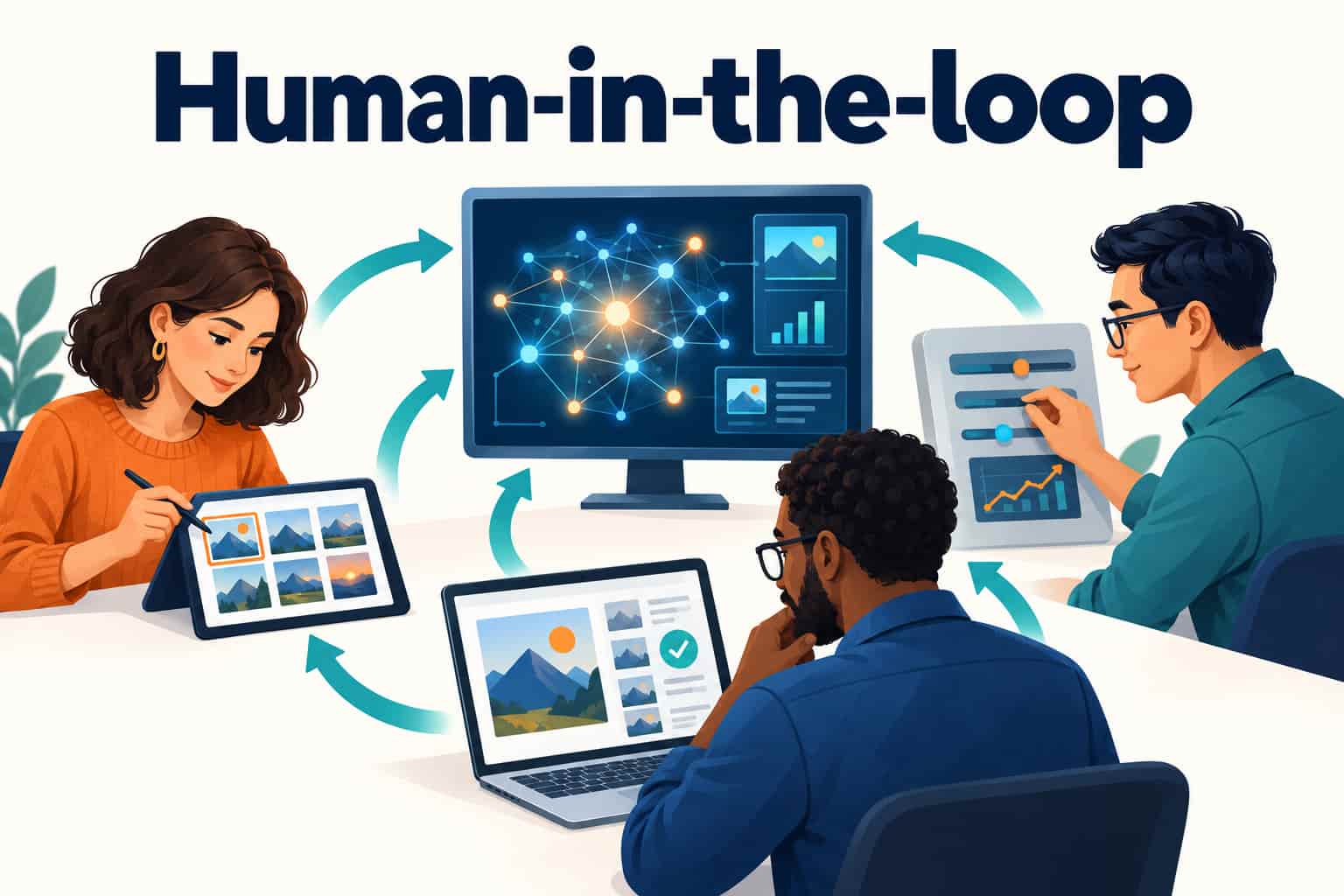
Human-in-the-loop (HITL) in general parlance means humans and AI work together at every important step of an AI system. HITL is a system of processes where various ‘humans,’ such as data annotators and evaluators, data scientists, and engineers, interact with the model differently to guide it.


Why keep humans in the loop


  • Improves accuracy and reliability because humans catch errors and weak spots in the model.
  • Helps detect and reduce bias in data and predictions, making results fairer.
  • Increases transparency and trust, as humans can explain and review decisions.
  • Supports ethical decisions, legal compliance, and clear accountability.


How does HITL work in practice


  • Collect and label data– Humans label images, text, or audio to create training datasets.
  • Train the model– The AI learns patterns from these labelled examples.
  • Test and review outputs– AI predictions are checked by humans, who accept, reject, or correct them.
  • Feed corrections back– Corrections are added as new training data, improving the model over time.

During data preparation and training, models often use historical data that may contain hidden biases. Human reviewers can spot these biases early and correct labels or rules so the model does not learn unfair patterns.

Even as AI becomes more powerful, human expertise in labelling, reviewing, and giving feedback remains essential, especially for safety, fairness, and real-world reliability. Despite increased automation, data annotation and feedback modelling still require human-in-the-loop systems, making it an indispensable element in the AI model training lifecycle.
ICT4D Successful Case Studies from Asia & Africa

ICT4D Successful Case Studies from Asia & Africa


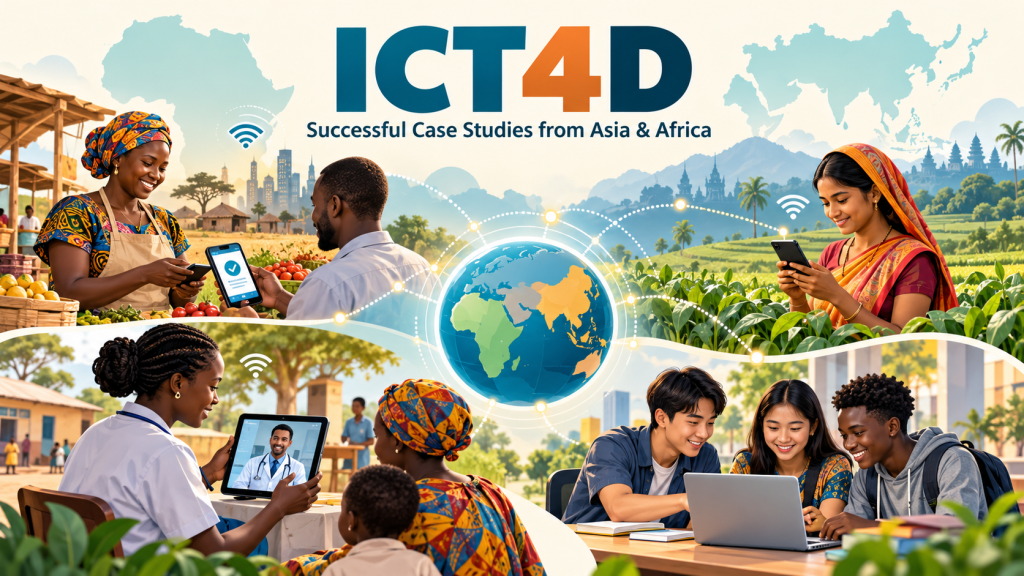
Information, Communication and Technology for Development (ICT4D) has been seen as a panacea for resolving the digital divide and bringing socio-economic changes in rural landscapes. Various interventions have been undertaken in the countries of the Global South, which have shown great adoptability of ICT tools.

Case Study & Country Initiator/Organization Mobile Technology USP Key Learnings Region
M-Pesa (Kenya) Safaricom (telecom), Visa, Grameen Creative Mobile phone (USSD/SMS) First mobile money service enabling cash transfers without bank; replaced physical money transport Fit into existing social practices (money transfers home, savings); dedicated system builders critical; engineering social/economic environment essential Africa
MomConnect (South Africa) South Africa National Dept of Health (NDOH) Mobile phone (USSD/SMS) World’s first nationwide mHealth program; government-led registration of pregnant women into national system High-level government buy-in fundamental; facility-based registration, facility code, helpdesk; demand generation; evidence-based messages in understandable language Africa
Kilkari (India) ARMMAN, Ministry of Health (MoHFW) Mobile phone (IVR voice calls) Largest maternal messaging program (3.2M+ users); AI-predicted timing for 12% higher pickup; audio in local language AI for timing optimization; public-private partnership scale; audio benefits marginalized with least resources; 22-28% behavior change achievable Asia


mMitra (India) ARMMA, Mobile Alliance for Maternal Action (MAMA) Mobile phone (voice calls/missed call system) Free voice calls with 9 tries per message, missed call system; urban slum focus; anemia & low birth weight reduction Nine retry attempts critical for reach; missed call system empowers users; urban slum focus addresses underserved; behavior change requires family engagement Asia
KACE – Kenya Agricultural Commodity Exchange Kenya Agricultural Commodity Exchange Ltd , ITC Mobile phone (SMS + IVR + Internet) Daily commodity prices from 12 markets via SMS; enhanced farmer bargaining power; direct buyer linkage Users pay for sustainability (business model); SMS frequency improves price expectations; infrastructure & transport costs remain challenges Africa
mTrac (Uganda) UNICEF Uganda, Uganda Ministry of Health Mobile phone (RapidSMS) Real-time health surveillance via SMS; reduced drug leakage; empowered district health teams with actionable data RapidSMS adaptable across countries; cost-savings + accuracy; transparency & accountability; decentralization support; systematic RTM as service delivery tool Africa
Hello Doctor (South Africa) Dr. Michael Mol, Tech company (private sector) Mobile phone (app + teleconsultation) Doctor calls patient within 1 hour (reverse model); affordable preventive education across Sub-Saharan Africa User-centered design (doctor calls patient); device-agnostic access; affordable model critical for SSA scale; preventive education + advice-based access Africa
eSanjeevani (India) National Health Mission, UCIH Mobile phone, Desktop (telemedicine platform) 3 crore+ teleconsultations; bridged rural-urban divide; COVID-19 vital service; home-based consultations COVID accelerated telemedicine; Decreased hospital load; Rural-urban divide bridged; Home-based quality care; Digital consultation normalization Asia