
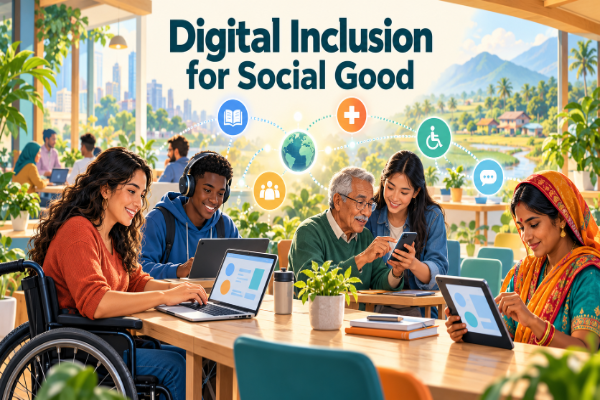

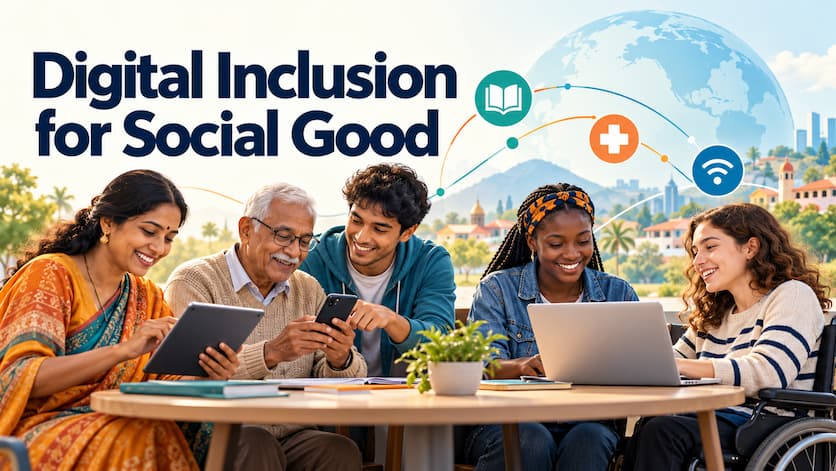
Digital Inclusion for Social Good
One key issue with datasets becoming integral to daily life is algorithmic exclusion and inherent bias. Algorithms exclude and perpetuate marginalised populations, cultures, and ways of being in ways that reflect the social relations prevalent online. This creates power asymmetries over control and use of data, with power concentrated in a few companies with limited public accountability. Low digital literacy and diminishing community agency increase this problem, as do gaps in managing online risk and data safety.
The field observations, as illustrated below, are based on a series of qualitative studies with various demographics conducted in 2025-26 in smaller towns in India, with particular focus on women using digital content through personalised apps; gig workers associated with platforms; and people from marginalised backgrounds.
Gender remains a persistent and consequential axis of digital inequality. Women Participants described lived experiences of stigma, exclusion, and discrimination, especially around gender. This highlights why feminist approaches
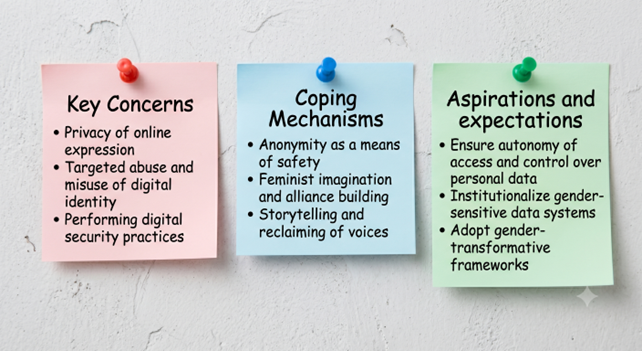
must address how patriarchy, asymmetries, and other structures act together to produce inequality.
The gig economy centres task-based, piecework assignments with short-term contracts and flexible timings, mediated by digital platforms. Evaluating gig livelihoods requires attention to platform indifference and the absence of worker protections.
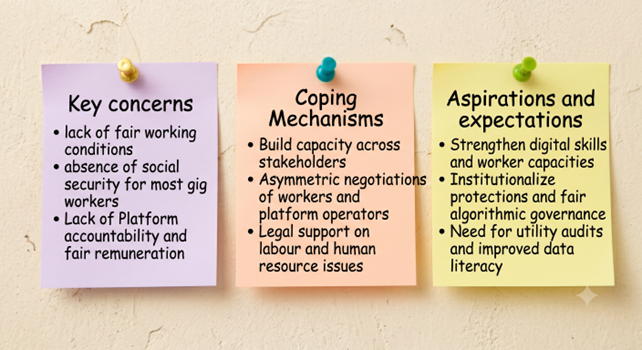
Digital divide and intersectional exclusion: Socioeconomic barriers prevent many marginalised individuals from accessing reliable technology or internet connections, particularly in small-tier towns. All stakeholders must rethink the adoption of emerging technologies not only by capability but also through the lenses of power, accountability, and sustainability.